What Is a Fair Interchange-Plus Margin? How to Judge the Markup in 2026
Wondering what is a fair interchange plus margin? Learn how to calculate your effective rate, spot hidden fees, and judge credit card processor markups today.
Published

What if the “fair” markup in a processing quote tells you less than your monthly statement? If you’re asking what is a fair interchange plus margin, there isn’t one number that works for every business. Your card mix, transaction patterns, and account fees all affect what you pay overall.
A simple benchmark is appealing, but a low quoted markup can hide costs elsewhere. A higher-looking markup may be easier to assess when every fee is clearly separated. Interchange and card-brand assessments are underlying costs. The processor’s markup is its charge for processing, while other fees can add to your total.
This guide explains how to read those charges, calculate your effective rate, and compare a proposed markup with your statement. You’ll learn what to look for and how to assess an offer against your business’s actual processing activity. Renegade Payments also reviews merchant processing statements at no cost to identify inflated rates and potential savings.
Key Takeaways
- To answer “what is a fair interchange plus margin,” assess clear pricing terms and your total statement cost, not one quoted figure.
- Separate interchange and network costs from the processor’s markup and additional account fees.
- Compare offers on equal terms by reviewing the markup, recurring charges, contract terms, and statement detail.
- Use your processing statements to check whether fees are clearly named and consistently applied.
- A complimentary savings analysis from Renegade Payments reviews your statements for inflated rates and potential savings.
Table of Contents
What Is a Fair Interchange-Plus Margin for a Merchant?
A fair interchange-plus margin is transparent and reasonable in the context of your complete processing costs. There’s no single markup that is fair for every merchant. One quote may show a low markup but add fees elsewhere. Another may have a higher processor markup and fewer account fees. Judge the written terms and the full statement together.
Interchange is an underlying cost associated with a card transaction. In an interchange-plus model, the processor passes that cost through to you and adds its own markup for processing. Card-brand network assessments and account fees may also appear on your bill. The quoted markup is one part of your cost, not the total.
For a broader explanation of the model, see what interchange-plus pricing means. For background on the wholesale transaction fee, Understanding Interchange Fees explains how interchange works and its role in card payments.
Which part of the bill is the processor margin?
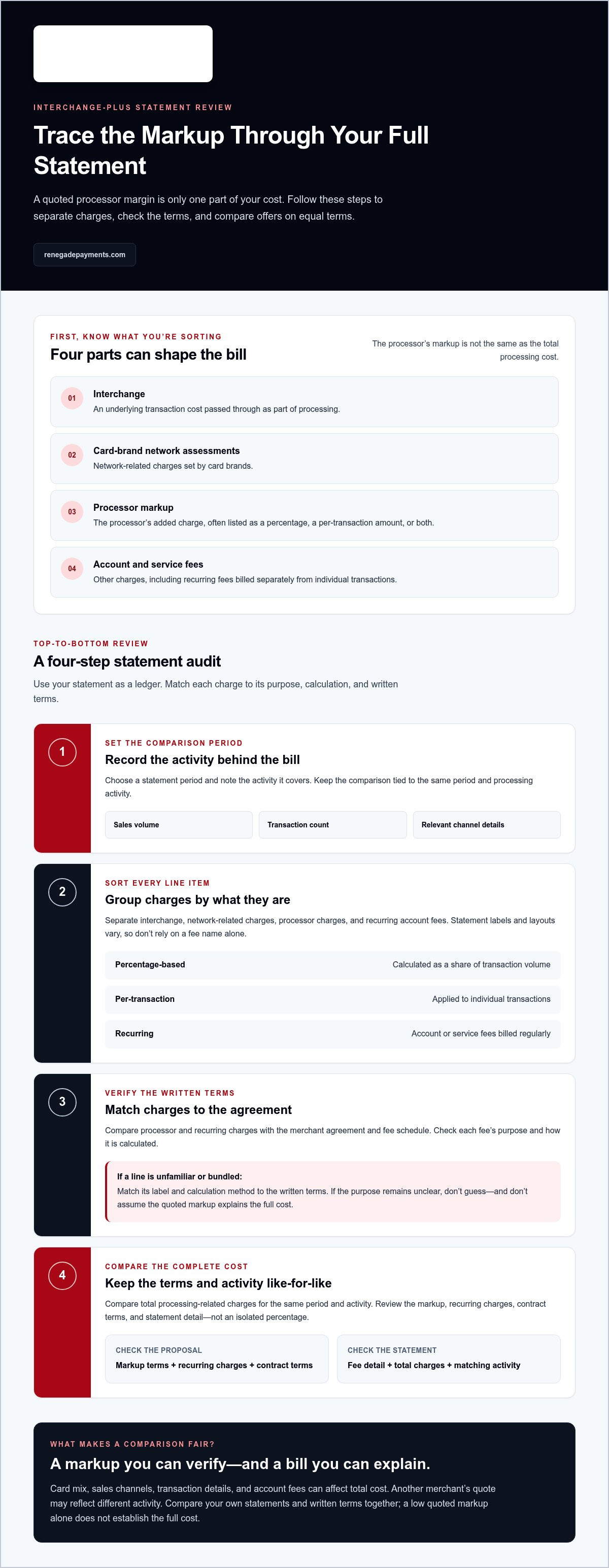
Sort charges by who receives them and how they’re calculated. Interchange is a transaction cost passed through as part of processing. Network assessments are charged by card brands. The processor markup is the processor’s added charge, often shown as a percentage, a per-transaction amount, or both. Statement labels and layouts vary, so check a fee’s purpose against its calculation and written terms instead of relying on the name alone.
Start by grouping statement charges into three categories:
- Percentage-based charges: fees calculated as a share of transaction volume.
- Per-transaction charges: amounts applied to individual transactions.
- Recurring charges: account or service fees billed on a regular basis.
Then compare the processor’s written markup terms with the relevant statement entries. If the quote describes one pricing structure but the bill groups fees under vague labels, the markup is difficult to verify. Clear terms should help you distinguish the processor’s charge from pass-through costs and recurring fees.
Why is there no single fair markup for every business?
Your processing costs depend partly on how customers pay. Card mix, sales channels, and transaction details can affect the interchange applied to a transaction. A business with a different mix of cards or payment channels may therefore have a different total cost, even with the same processor markup.
That’s why comparing markups alone can be misleading. Keep the processor’s stated markup separate from interchange, network assessments, and other account charges that affect your effective rate. Compare complete statements and written terms, not an isolated percentage. To answer what is a fair interchange plus margin for your business, look for a markup you can verify and a total bill you can explain.
How Interchange-Plus Markup Affects Your Total Processing Cost
Your processing bill is made up of more than the markup shown in a quote. It may include interchange, card network costs, the processor’s markup, and applicable account fees. The total depends on how those charges apply to your transactions and account. A low advertised markup can still lead to a higher bill if other costs add up or the terms are hard to verify.
Interchange-plus separates underlying transaction costs from the processor’s charge. That can make a bill easier to inspect, but only when the fee details are clear. The Benefits of Interchange-Plus Transparency come from being able to distinguish network costs from processor markup rather than seeing one bundled figure.
How to separate markup from other statement fees
Use your statement as a ledger. Sort each line into interchange, network-related charges, processor charges, or recurring account fees. Then compare processor and recurring charges with the merchant agreement and fee schedule. Since labels vary, don’t guess at an unfamiliar line. Match its name and calculation method to the written terms.
For a practical review, choose a statement period and record:
- Transaction activity: sales volume, transaction count, and relevant channel details.
- Variable charges: fees calculated by transaction, by volume, or both.
- Recurring charges: account fees billed separately from individual transactions.
- Total fees: all processing-related charges for that same period.
Use the same period and activity when comparing statements or offers. A quote based on one month’s transaction pattern may not explain a bill from a different month. Compare like with like, then check whether the charges match the agreed terms. If a line is bundled or unclear, don’t treat the advertised markup as the full cost.
Which business details can change the comparison?
Card-present and online payments are different processing contexts. The cards customers use, transaction sizes, and sales patterns also shape the activity being priced. A change in those details can change the transaction mix on your statement, even if the processor’s stated markup stays the same.
Another merchant’s quote isn’t automatically a fair benchmark for your business. Their sales channels and transaction mix may differ from yours. Compare offers with your own statement activity and make sure each proposal accounts for the same types of charges. To assess what is a fair interchange plus margin, trace the fees from the written markup to the complete bill.
Renegade Payments offers a complimentary savings analysis to review your existing statement and identify inflated rates and potential savings. Learn more about reviewing your processing costs.
How to Tell Whether an Interchange-Plus Margin Is Fair
A single markup figure can’t prove that an offer is fair. It leaves out the rest of the fee structure and doesn’t show whether the statement charges match the written terms. To answer what is a fair interchange plus margin for your business, test the quote against your processing records. The goal is to understand each charge, not just to find a percentage that looks appealing.
Interchange is an underlying cost, separate from the processor’s margin. For background on those pass-through charges, review interchange fees merchants should understand. Then use this sequence to evaluate the offer.
- Gather the records. Pull recent processing statements and your current merchant agreement or fee schedule. Include the proposed offer in writing. You need both actual charges and quoted terms to make a useful comparison.
- Record the activity. Note the statement period, sales volume, transaction count, and payment channels shown. This gives you a baseline and helps explain differences between periods.
- Identify the markup terms. Find the stated percentage and any per-transaction processor charge. Record how each is calculated. Check the agreement rather than assuming a label describes a fee accurately.
- Reconcile every charge. Match statement entries to the fee schedule. Separate interchange and network-related charges from processor charges and recurring fees. Mark bundled, vague, or unexplained lines for follow-up instead of treating them as verified.
- Check the complete terms. Confirm that the quoted markup and other listed fees appear in the written agreement. Note any differences between the proposal, fee schedule, and statement.
Use statements and written terms as evidence
A statement shows what was charged. The agreement and fee schedule explain what should be charged. You need both. Compare the quoted markup with the corresponding processor entries, then trace other line items to their written descriptions. If a fee is grouped under a broad label or its calculation is unclear, keep it in an unresolved category. Don’t count an unexplained charge as a confirmed pass-through cost or assume it is included in the markup.
Compare competing offers on equal terms
Use the same processing period, transaction data, payment channels, and service assumptions for each proposal. Include monthly, annual, minimum, and other listed fees alongside the markup. If an offer doesn’t explain how a charge is calculated, record that gap rather than making an assumption. A useful comparison shows what matches, what differs, and what still needs a written explanation.
Compare offers directly only when their terms and assumptions line up. Otherwise, you’re comparing different pricing structures, not deciding which markup is fair. Keep the records together so you can verify the full cost against the written terms.
What to Check Before Accepting a Processor Markup
A proposal isn’t complete just because it puts a markup in bold. Before accepting, compare the processor’s charge with recurring fees, contract terms, statement detail, and the service arrangement. This gives you a clearer view of both the cost and what the written terms promise.
Use a side-by-side table. Fill it in from the proposal, merchant agreement, fee schedule, and a comparable processing statement. Flag any charge you can’t trace instead of assuming it’s included.
| Compare | What to check |
|---|---|
| Markup | Are the percentage and per-transaction charges stated clearly and separated from interchange and network costs? |
| Other recurring charges | Are account, monthly, annual, minimum, or other recurring fees listed with their billing terms? |
| Contract terms | Do the written terms describe the pricing arrangement and any conditions that could change the charges? |
| Statement transparency | Can you match statement entries to the fee schedule and see how each charge is calculated? |
| Service arrangement | Does the proposal describe the processing setup and service in terms that fit your business needs? |
Questions your proposal comparison should answer
Start with traceability. Can you match each quoted fee to a written term or statement entry? Does the proposal distinguish the processor’s markup from underlying interchange and network costs? Are transaction-related charges and recurring fees both visible in the comparison? Clear answers make an offer easier to assess. A vague label or missing fee detail is an open question, not proof that the charge doesn’t apply.
How to spot an incomplete comparison
Watch for a proposal that promotes one rate while leaving other charges out of the headline. A comparison can also mislead if its assumptions don’t match your sales pattern, including your payment channels and transaction types. Don’t call an offer cheaper until you’ve accounted for all listed fee components and compared the same activity across proposals.
Consistency matters, too. Check whether each charge is named clearly and applied the same way throughout the statement period. If a fee appears under a different label, changes unexpectedly, or can’t be matched to the written terms, flag the difference for clarification. Keep unresolved items visible in your comparison rather than smoothing them over.
Consider the service arrangement alongside the price. The proposed setup and support should fit how your business accepts payments, not just have a smaller-looking line item. That context helps answer what is a fair interchange plus margin for your needs: a markup you can understand in relation to the complete charges and the service provided.
Renegade Payments can review your current fees through a complimentary statement review to identify inflated rates and potential savings.
Review Your Interchange-Plus Margin with Renegade Payments
The right decision doesn’t come from a markup figure alone. Judge the processor’s charge against the written terms and the full cost shown on your processing statement. Renegade Payments provides a complimentary savings analysis of existing merchant processing statements to identify inflated rates and potential savings. The review gives you information to consider, not a promise that changing pricing will lower costs.
Review your statement alongside the terms you’re considering. This makes it easier to see which charges match the stated arrangement, which entries deserve a closer look, and how the markup fits your actual account. For merchants asking what is a fair interchange plus margin, the best starting point is their own documented fees, not a number pulled out of context.
What a merchant statement review can clarify
A statement review can organize charges into a clearer picture of what you pay to accept cards. It can highlight entries that merit closer examination, including fees that are difficult to connect to the written terms. The goal is clarity: understand your current processing costs, then assess how they compare with an interchange-plus structure that separates underlying transaction costs from processor charges.
Use the findings to focus your review:
- Which statement charges are clearly identified, and which need explanation?
- Do the fees align with the pricing terms you were given?
- How does your current total compare with the proposed interchange-plus structure?
The answers can support a more informed comparison. They don’t guarantee that every charge can change or that a different pricing arrangement will benefit every business. Your transaction activity and fee structure matter, so review the evidence before deciding.
When to compare interchange-plus with dual pricing
Interchange-plus and dual pricing are different approaches to processing payments. With interchange-plus, the processor’s markup is shown separately from underlying transaction costs. Dual pricing is a separate way to structure payment acceptance and manage fees at checkout. The better fit depends on your checkout model and how you want to handle processing costs. For a separate overview, see the dual pricing payment processing guide.
Use your statement review to ground that choice in your actual fees and payment setup. Renegade Payments offers interchange-plus processing and dual pricing, as well as a complimentary savings analysis based on merchant statements. The review can help you examine current terms and identify potential savings without promising a particular result.
Ready to put your fees under the microscope? Request a complimentary savings analysis from Renegade Payments.
Turn Your Processing Statement Into a Clear Next Step
The best answer to what is a fair interchange plus margin is one you can verify against your business’s actual processing activity. Use your records to guide your next decision. If fees are difficult to trace or the written terms don’t match the statement, get a clearer view before committing to a pricing change.
Renegade Payments reviews merchant processing statements at no cost and offers both interchange-plus and dual pricing. A complimentary savings analysis can identify rates that merit a closer look and potential savings, without promising a specific outcome. Request a complimentary savings analysis and take the next step toward processing terms you can understand and assess with confidence.
Frequently Asked Questions
Is a lower interchange-plus markup always the better deal?
No. A lower markup doesn’t guarantee a lower total bill or a better fit. One offer may show a smaller processor charge but list separate recurring fees, while another may present charges differently. Compare the full cost using the same transaction activity and period. To judge what is a fair interchange plus margin, consider the complete pricing terms and how clearly you can verify them, not just the headline markup.
Can interchange-plus pricing change from one transaction to another?
Yes. The underlying interchange cost can differ across transactions because card types and transaction details vary. The processor’s markup is a separate part of the pricing terms, so don’t confuse a change in underlying cost with a change in markup. If the processor charge itself appears different, compare the statement with your agreement and fee schedule. Check whether the transactions were processed under the same terms and circumstances before drawing a conclusion.
How do I calculate my effective processing cost from a statement?
Divide the processing fees for a statement period by the sales volume for that same period, then multiply by 100 to express the result as a percentage. For instance, use one month’s total processing-related fees over that month’s sales, not fees from one period and sales from another. Include relevant processing charges in the numerator, and keep the calculation consistent when comparing periods or proposals. This gives you an overall rate, not the processor markup by itself.
What should I do if my statement does not clearly identify the markup?
Don’t guess based on a fee label. Compare the statement with the merchant agreement and fee schedule, then note any entries you can’t match to a written term. Separate unclear charges from fees you can identify. This gives you a focused list to resolve and helps prevent an unexplained amount from being mistaken for interchange or processor markup. Keep the statement period and transaction details with your notes so you can trace the entry.
Does interchange-plus pricing include monthly or account fees?
Not necessarily. Interchange-plus describes how transaction costs and the processor’s markup are structured. It doesn’t automatically mean recurring account fees are included. Your agreement may list monthly or other charges separately. Check the fee schedule for each recurring item, its billing frequency, and any conditions attached to it. Include those charges in your comparison alongside transaction-based costs, so the quoted markup doesn’t stand in for the entire account expense.
When should a business review its interchange-plus margin?
Review it regularly and whenever something changes that could affect your costs or terms. A new agreement, a shift between in-person and online sales, or a noticeable change in statement charges can all justify another look. Compare statements across periods with similar activity, then check whether the written pricing still matches what you’re being billed. A review can help you spot questions early, before an unclear charge or changed transaction pattern is mistaken for a markup increase.
Frequently Asked Questions
Clear, straightforward answers about payment processing rules, rates, and terms.
Get your free savings
analysis in 24 hours
Upload a recent processing statement and we'll show you exactly how much you can save. No commitment, no pressure, no sales pitch.