Dual Pricing vs. Surcharge: What’s the Difference?
Dual pricing vs surcharge what's the difference? Learn how both payment models impact checkout, compliance, processing fees, and overall customer experience.
Published
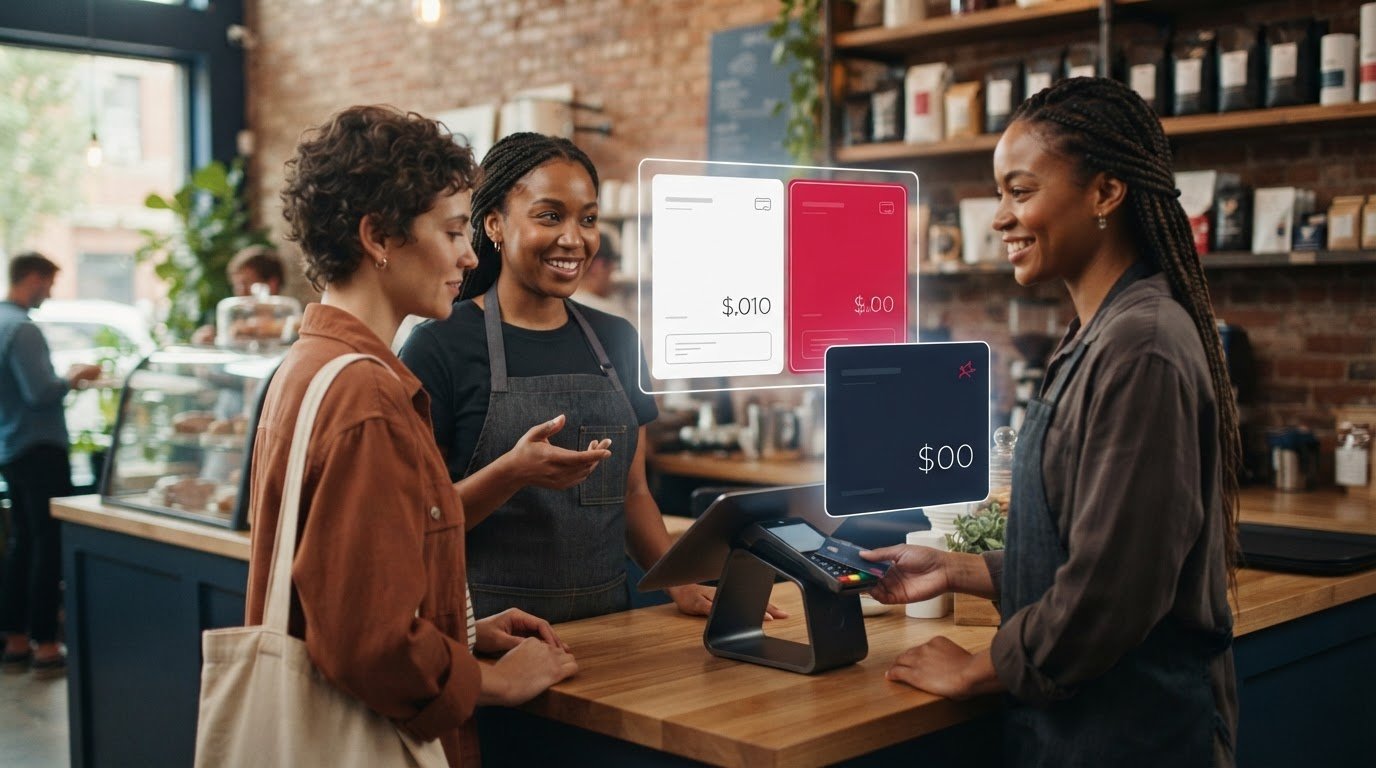
What if the label on a payment program matters less than the price your customer sees? If you’re asking “dual pricing vs surcharge what's the difference,” start at checkout: dual pricing displays cash and card prices upfront, while a surcharge adds a separate charge to an eligible credit card transaction. The terms are sometimes blurred, but the customer-facing mechanics differ.
It’s reasonable to want processing costs under control without surprising customers or creating compliance problems. These models have different requirements. Surcharge rules can vary by state and card network, and network rules prohibit surcharges on debit and prepaid cards.
This guide explains how each approach works, what merchants should verify before choosing one, and how to compare the options with actual processing statements and business needs. Use it to weigh the costs, checkout experience, and operational requirements before making a change.
Key Takeaways
- For “dual pricing vs surcharge what's the difference,” focus on when customers see the price difference: as two prices upfront or as a separate charge at checkout.
- Compare how each model handles price display, payment choice, transaction processing, and receipts.
- Before choosing, review card-network rules, state laws, processor procedures, and customer disclosure requirements.
- Use your processing statements to identify fee categories and compare pricing structures against your business needs.
- Separate the cost comparison from customer-facing pricing and compliance decisions. One does not settle the others.
Table of Contents
- Dual pricing vs. surcharge: What is the difference at checkout?
- How dual pricing and surcharging work through a payment transaction
- Compliance and customer experience: the questions merchants should not skip
- Which model fits your business? Compare the trade-offs
- Compare your processing costs before choosing a pricing model
Dual pricing vs. surcharge: What is the difference at checkout?
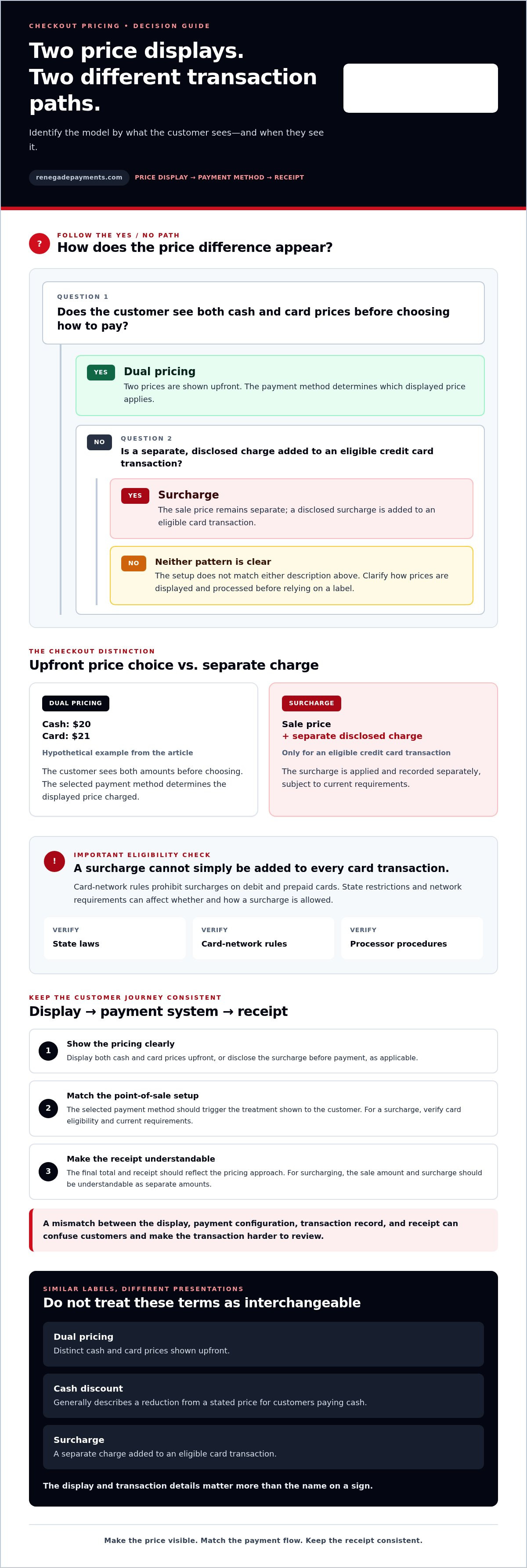
Both models address card acceptance costs, but they display prices differently. Dual pricing shows a cash price and a card price before the customer pays. A surcharge adds a disclosed charge to an eligible card transaction. The distinction affects what customers see, when they see it, and what the merchant needs to verify.
With dual pricing, the card price is displayed upfront. With a surcharge, a separate charge is added when an eligible card is used. That is the clearest way to distinguish the two at checkout. The phrase dual pricing vs surcharge what's the difference may sound like a terminology question, but the timing of the price disclosure and the receipt show the practical difference.
What does a customer see with dual pricing?
Picture a shelf label that reads “Cash: $20” and “Card: $21.” These figures are hypothetical, not a processing rate or a Renegade Payments price. The customer sees both options before choosing how to pay, and the payment method determines which displayed price applies. Show the card price before the customer reaches the register. Clear, consistent displays let customers make an informed choice before the transaction begins.
What does a customer see with a surcharge?
With a surcharge, an item may be priced at $20, followed by a separate surcharge line when the customer pays with an eligible credit card. The extra amount must be disclosed and applied according to the rules governing the transaction. Card-network requirements, state laws, processor procedures, and disclosure standards can all matter. The Surcharge (payment systems) overview explains the basic idea, but it does not replace checking current requirements for your business.
The contrast is straightforward: dual pricing presents two prices before the customer chooses, while surcharging presents a price plus a separate charge tied to an eligible card payment. A surcharge cannot simply be added to every card transaction. Card-network rules prohibit surcharges on debit and prepaid cards, and state restrictions and network requirements can affect whether and how a surcharge is allowed. Verify current rules before setting up the checkout display or payment system.
Don’t treat “dual pricing,” “cash discounting,” and “surcharging” as interchangeable labels. They describe different price presentations, and the label alone does not establish whether a setup follows the rules. Dual pricing shows distinct cash and card prices upfront. A cash discount generally describes a reduction from a stated price for customers paying cash. A surcharge adds a separate charge to an eligible card transaction. The display and transaction details matter more than the name on a sign.
For customers, clarity is the test. A menu, shelf label, or posted price should make the applicable amount understandable before payment. The final total and receipt should match the approach being used. If the card price appears only after a customer taps, or a separate charge appears without clear disclosure, the experience can feel like a surprise. Keep pricing visible, consistent, and aligned with applicable rules.
How dual pricing and surcharging work through a payment transaction
Follow the transaction from the first price a customer sees to the final receipt. Dual pricing applies one of two displayed prices based on the payment method. Surcharging keeps the underlying sale price separate and adds a disclosed charge to an eligible card transaction. The processor setup and transaction records should match the model shown to the customer.
Checkout detail | Dual pricing | Surcharging
Displayed prices | Cash and card prices appear before payment. | The sale price appears, with a surcharge disclosed separately as required.
Transaction treatment | The selected payment method determines which displayed price is charged. | A separate charge is applied to an eligible card transaction, subject to current rules.
Customer choice | The customer sees the price difference before choosing how to pay. | The customer sees the surcharge disclosure and can choose an eligible payment method.
Put simply, dual pricing selects between prices shown upfront; surcharging adds a separate charge during an eligible card transaction. In either setup, the point-of-sale configuration, transaction record, and receipt should be consistent. A mismatch can confuse customers and make it harder for the business to review the transaction later.
Follow a dual-pricing sale from display to receipt
The business displays both prices on the menu, shelf label, or other customer-facing price information. The customer chooses an item, sees the applicable price during checkout, then selects a payment method. The receipt should clearly reflect the amount charged and the transaction. Receipt wording can vary, so configure records to match the pricing model rather than relying on a generic template.
Follow a surcharge sale from disclosure to receipt
A surcharge sale starts with the underlying price and required disclosure before payment. If the card transaction is eligible, the system adds and records the surcharge separately from the goods or services. The receipt should make the sale amount and surcharge understandable. Card-network rules prohibit surcharges on debit and prepaid cards, so verify card eligibility and current state, network, and processor requirements.
Check the full transaction path, not just the sign. Confirm that displayed prices or surcharge disclosures match the payment system configuration, that the selected method triggers the intended treatment, and that the receipt records it accurately. That is why dual pricing vs surcharge what's the difference is more than semantics: the two models require different transaction handling.
If you’re comparing a pricing setup with your current processing costs, a merchant statement savings analysis can help clarify the numbers before you choose a customer-facing approach.
Compliance and customer experience: the questions merchants should not skip
Neither dual pricing nor surcharging is automatically compliant just because a processor can configure it. The setup must match the rules that apply to your business, transaction, and location. Treat compliance as a series of checks, not a label stamped on a pricing model. Requirements can change, so verify current primary sources before launch and when you revise your checkout process.
Which surcharge rules should a merchant verify?
Start with the card networks’ current rules, then review applicable federal and state requirements. Check whether notice or registration is required, what disclosures must appear and where, which transactions are eligible, and how a surcharge must be calculated or recorded. Requirements may differ by jurisdiction and payment type. A processor’s setup does not necessarily cover every legal obligation, and this overview is not legal advice.
Keep the sources distinct. Card-network rules govern network participation. State and federal laws may impose separate requirements. Processor procedures affect how a pricing model is configured and processed. Customer disclosures determine what people see before they pay. Review each layer against current primary sources for your operating locations and sales channels. A rule for an in-person sale may not answer every question about online checkout.
For 2026, verify requirements directly with the relevant card networks, government sources, and your processor’s current documentation. Look for updates to notice, disclosure, registration, and transaction eligibility requirements. Record what you checked and when, then revisit the review if rules or your checkout process change. No single display or configuration should be treated as a nationwide answer for every merchant.
How can pricing choices affect customer trust?
Test the experience from the customer’s point of view. Can someone understand the applicable price before choosing how to pay? Is the information consistent across signs, menus, online listings, and the payment screen? Can staff explain the difference clearly? A confusing display could lead to questions or frustration. Assess that business risk rather than assuming either model will produce a particular result.
Check the receipt, too. Customers should be able to follow what they were charged and understand any separate surcharge. Train staff to explain the pricing plainly, without using dual pricing, cash discounting, and surcharging as if they mean the same thing. Clear communication does not replace compliance checks, but it can help prevent avoidable surprises at checkout.
The search for dual pricing vs surcharge what's the difference should not stop at the sign or payment screen. Review the full path: what customers see, what the system applies, what the receipt records, and which rules govern the transaction. A dedicated dual pricing compliance checklist can help organize the review. Make sure it reflects current requirements rather than outdated assumptions.
Which model fits your business? Compare the trade-offs
There is no automatic winner. The right fit depends on how your business sells, how customers pay, and what your team can explain clearly. Compare the models against actual sales patterns, not just the promise of reducing processing costs. Pricing changes affect customer communication and daily operations, so weigh those alongside the numbers.
Decision factor | Dual pricing | Surcharging
Customer price clarity | Customers compare two displayed prices before paying. | Customers need to understand the disclosed charge and how it affects the total.
Operational change | Update price displays and train staff to explain both prices consistently. | Configure checkout and disclosures to apply the charge only where permitted.
Cost visibility | Customers see distinct prices by payment method. | The surcharge is shown separately from the underlying sale price.
Rule review | Review applicable pricing and disclosure requirements. | Review applicable laws, network rules, processor procedures, disclosures, and transaction eligibility.
When might dual pricing merit consideration?
Dual pricing may merit consideration if you can display both prices consistently across menus, shelf labels, online listings, and checkout. It may also suit a point-of-sale environment where customers can choose between cash and card and staff can explain the options clearly. Before changing displays, consider your average ticket, payment mix, and whether customers can easily compare the prices.
When might surcharging merit consideration?
Surcharging may warrant review if your business can disclose a separate card transaction charge clearly and your checkout system can handle it accurately. Consider how customers may respond, which payment types you accept, and whether your sales channels support clear disclosures. It is not available or suitable in every jurisdiction. Check current requirements before treating it as an option.
Put your operating realities on paper. A business with changing prices, multiple sales channels, or limited time for staff explanations may face different implementation demands from a business with simple, stable displays. Average ticket and payment mix also shape the comparison. Model each approach against real transactions instead of relying on a single example. Neither model guarantees savings, and a pricing choice alone will not show the full effect on processing costs.
Keep related comparisons distinct. Dual pricing versus a cash discount is a separate question from surcharge treatment. Compare those terms on their own rather than using them as substitutes for the dual pricing versus surcharge question.
The phrase dual pricing vs surcharge what's the difference helps frame the choice, but fit comes down to customer clarity, operational readiness, rule checks, and actual processing data. Renegade Payments offers dual pricing and interchange-plus options, along with complimentary merchant statement reviews to identify processing costs and potential savings. Compare your processing options against your business needs before deciding.
Compare your processing costs before choosing a pricing model
Test a pricing model against actual processing costs, not a sales pitch or headline rate. Start with your statements. Identify what you pay, how customers pay, and what operational changes each approach would require. Then assess customer-facing pricing and compliance separately. Cost analysis can inform the decision, but it cannot determine whether a setup fits your business or meets current requirements.
Use real statements to compare processing costs
Gather processing statements for comparable periods. Identify the fee categories, transaction counts, sales volume, and payment types shown in the records. Your card, debit, and other payment mix matters because a pricing model may affect transaction types differently. Use your own figures rather than an assumed average. Without reviewing the merchant’s actual data, a savings estimate is guesswork.
Use this process to keep the comparison grounded:
- Gather statements for comparable periods, along with any available transaction summaries.
- Sort the costs by fee category and note transaction patterns, including changes in payment mix.
- Compare structures against the same sales activity, rather than comparing unrelated rates or periods.
- Review fit by considering implementation needs, customer expectations, and applicable rules separately from the cost calculation.
Understand what each statement line represents before drawing conclusions. A headline rate may not capture every processing expense, and a lower-looking rate does not automatically mean a lower total cost. Compare the full statement using consistent assumptions. If you’re assessing interchange-plus as another option, an interchange-plus pricing guide can explain how that structure presents processing costs. Keep that comparison separate from the customer-facing question of how prices appear at checkout.
Turn the comparison into a clear next step
Bring the numbers back to the realities of running your business. Can your team maintain consistent displays? Will customers understand the pricing before they pay? Can your payment setup handle transactions accurately? These operational questions matter alongside statement totals. The answer to “dual pricing vs surcharge what's the difference” clarifies the checkout mechanics, but your costs and business needs should guide the comparison.
Renegade Payments reviews merchant statements at no cost to identify processing costs and potential savings. The review gives you a clearer basis for comparing available processing structures. It does not replace decisions about customer disclosures or compliance, and it does not guarantee a particular result. Review the figures, weigh the operational trade-offs, and make the pricing decision with the full picture in view.
Request a complimentary processing savings analysis to compare your current processing costs with available options using your statement data.
Make your next pricing decision with clear numbers
Don’t choose a model simply because it sounds simpler. Build the decision around your transactions, customer expectations, and operating needs. If “dual pricing vs surcharge what's the difference” brought you here, use that distinction to ask a more useful question: which approach makes sense for your business after you account for the numbers and day-to-day impact?
Renegade Payments reviews merchant processing statements at no cost. The analysis can identify current processing costs and potential savings under available pricing models. It will not decide your customer-facing prices or replace a review of applicable requirements. It gives you evidence to weigh your options instead of relying on assumptions or a headline rate.
Request a complimentary processing savings analysis and put your statement data to work. Make your next decision with a clearer view of what you pay and which options deserve a closer look. Clear numbers put you in control.
Frequently Asked Questions
Is dual pricing the same as a surcharge?
No. They handle the price difference in different ways. With dual pricing, a business presents cash and card prices as pricing options. A surcharge is a separate charge added to an eligible card transaction. For example, a merchant reviewing checkout reports should be able to tell whether the card amount was the selected displayed price or an added transaction charge. The distinction affects how the sale is configured and recorded.
Can a business use dual pricing and surcharging at the same time?
Don’t assume you can combine them on the same sale. Applying both could create a confusing or duplicative charge, and each approach has its own requirements. If you’re considering different methods for separate locations, sales channels, or transactions, map exactly how each will appear and process. Then verify the setup against current laws, card-network rules, and processor procedures before using it. Clear records help staff apply the intended model consistently.
Is dual pricing legal in every U.S. state?
As of 2026, dual pricing is legal in all 50 states as a pricing strategy, but that does not make every implementation automatically compliant. Prices and payment conditions still need to be presented clearly and handled consistently. For example, a customer should not discover the applicable card price only after choosing a payment method. Check current state requirements and card-network rules for your checkout setup before launch.
Can merchants surcharge debit card transactions?
No. Card-network rules prohibit surcharges on debit and prepaid card transactions nationwide. That remains a critical distinction even if a debit card is processed in a way that looks similar to a credit card at checkout. Configure payment acceptance so the surcharge is not applied to ineligible transactions, and verify current network and processor procedures. Do not rely on how a card looks or a staff member’s guess to determine eligibility.
How should a surcharge be disclosed to customers?
Disclose the surcharge clearly before the customer commits to the transaction, and make sure the amount shown at checkout matches what the system applies. Depending on applicable rules, disclosures may also be required at the business entrance or on the receipt. For an online sale, review the full path from product page to payment screen. Exact placement and wording can depend on current state, network, and processor requirements.
Does dual pricing eliminate credit card processing costs?
No. The business still processes card payments and incurs processing costs. Dual pricing can help offset those costs through the card price, but the result depends on actual transaction activity and how the pricing is set up. Compare processing statements before and after a change, using similar periods and payment mixes. That gives you a more grounded view than assuming the model removes costs entirely.
How can I tell whether dual pricing or surcharging fits my business?
Compare your payment mix, sales channels, customer expectations, and ability to display and explain the pricing clearly. Then review processing statements to understand current costs and model each option against actual transactions. Keep that financial comparison separate from compliance checks: a lower projected cost does not establish that a setup is permitted. The question “dual pricing vs surcharge what's the difference” is a starting point. Your records and operating needs should guide the choice.
Frequently Asked Questions
Clear, straightforward answers about payment processing rules, rates, and terms.
Get your free savings
analysis in 24 hours
Upload a recent processing statement and we'll show you exactly how much you can save. No commitment, no pressure, no sales pitch.